
- IoT
-

Creator: Puneet R Saharey
-
Jan 28, 2026
Robotics: Building Intelligent Machines for the Real World
Introduction
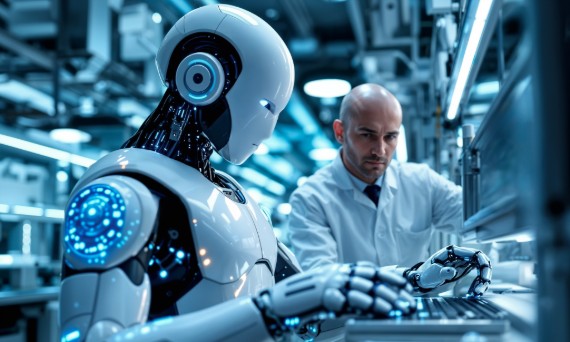
Robotics is transforming industries by combining mechanical systems, electronics, and intelligent software to create machines that can sense their environment, make decisions, and perform actions. From manufacturing floors and healthcare facilities to classrooms and smart automation systems, robotics has become a key driver of innovation in modern technology.
What Is Robotics?
Robotics is a multidisciplinary field that focuses on the design, construction, and programming of machines capable of performing tasks autonomously or semi-autonomously. These systems use sensors to gather data, controllers to process information, and actuators to execute physical movements. Robotics integrates concepts from mechanical engineering, electronics, computer science, and artificial intelligence.
Core Components of Robotics Systems
- Mechanical structures and robotic frames
- Sensors for perception and feedback
- Controllers and embedded systems
- Actuators such as motors and servos
- Control algorithms and software
Applications of Robotics
Robotics is widely adopted across multiple sectors due to its ability to improve efficiency, accuracy, and safety.
- Industrial Automation and Manufacturing: Assembly lines, welding robots, material handling, and quality inspection
- Healthcare and Assistive Robots: Surgical robots, rehabilitation devices, and patient-assistance systems
- Autonomous Vehicles and Drones: Self-driving cars, delivery drones, and aerial surveillance systems
- Educational and Research Platforms: Learning kits, laboratory robots, and experimental research systems
Robotics Learning at XP Labs
Robotics training at XP Labs is designed to be fully hands-on and industry-oriented. Learners work directly with real robots, sensors, motors, and controllers to build functional robotic systems from the ground up.
The program emphasizes practical problem-solving, system integration, and debugging techniques. By working on real-world scenarios and project-based learning, students gain confidence in designing, testing, and optimizing robotic solutions.
Skills Gained Through the Program
- Robot assembly and mechanical integration
- Sensor interfacing and motor control
- Embedded programming for robotics
- Autonomous navigation and control logic
- Real-world project and teamwork experience
Conclusion
Robotics skills open doors to careers in automation, research and development, and intelligent system design. With rapid advancements in AI, robotics, and smart automation, this field offers a future-proof and highly impactful career path.